 You are viewing the Ft. Myers location.

After a Florida storm, it is natural to focus on the most visible problems around your property. Fallen branches, damaged fencing, roof concerns, and yard cleanup may all demand immediate attention. However, your plumbing system can also be affected by heavy rain, flooding, debris, and saturated ground.
Some plumbing problems are easy to spot, while others develop gradually. Once conditions are safe, checking a few key areas can help you identify possible damage and know when to call a plumber.
Check for Drainage Problems
Your drains can provide early clues that something is wrong after periods of heavy rainfall. Pay attention to sinks that empty more slowly than usual, toilets that don’t flush normally, or drains that make gurgling noises.
A single slow drain may simply need attention at that fixture. Multiple slow or backed-up drains, however, can indicate a larger problem with the home’s drainage or sewer system.
Walk the Yard
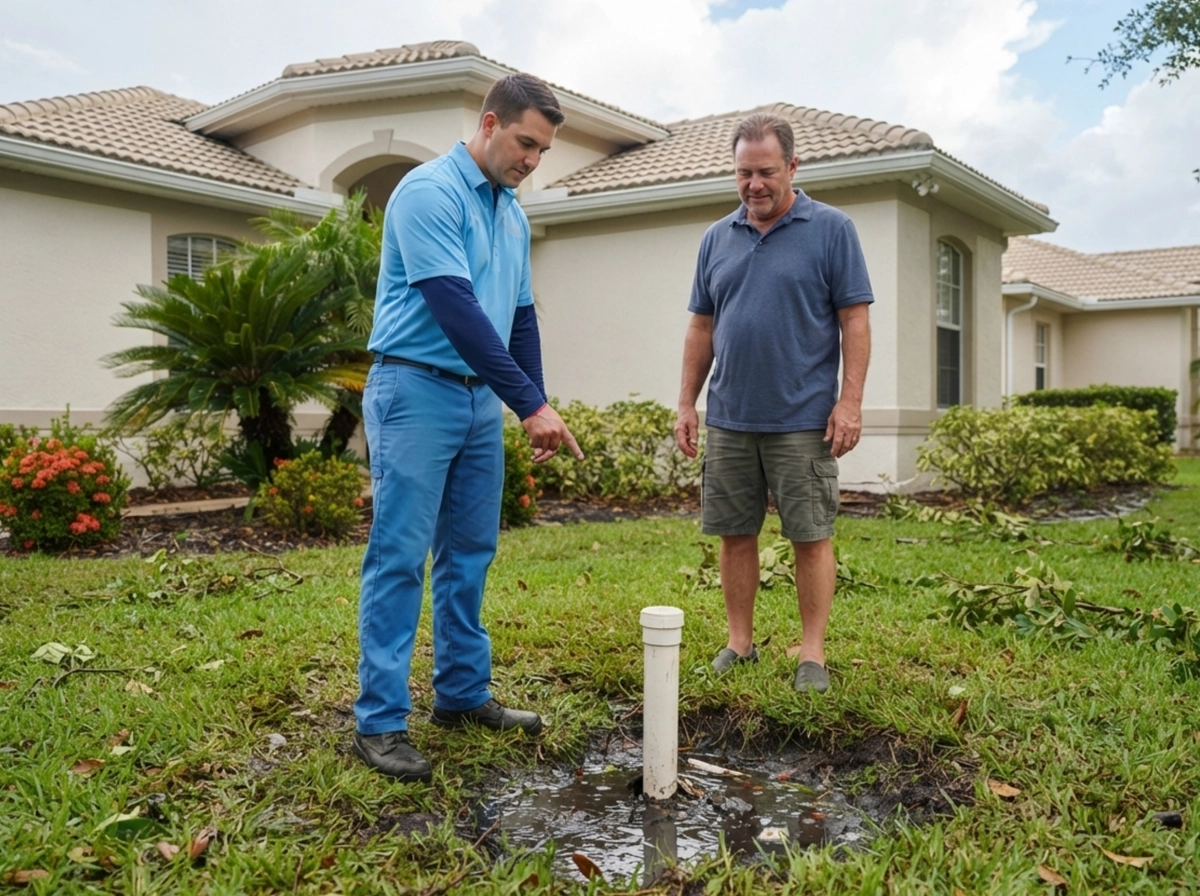
After the storm, take a walk around your yard and pay attention to anything that could indicate a sewer line problem or backup. Sewage odors, unusually soggy areas, wastewater pooling on the ground, or water appearing around a sewer cleanout can all be warning signs. If you notice any of these issues, avoid the affected area and contact a professional plumber to inspect the sewer line.
Examine Outdoor Plumbing Components
Storm debris and falling branches can damage plumbing equipment outside the home. Check outdoor faucets, hose connections, irrigation components, and any visible pool plumbing.
Look closely for cracks, loose connections, dripping water, or equipment that appears to have shifted. Addressing a small outdoor leak promptly can prevent unnecessary water waste and further damage.
Use Caution Around Flood-Damaged Equipment
If flooding occurred around a water heater or other plumbing equipment with electrical or gas components, avoid turning it back on until it has been evaluated. Water exposure can create safety concerns even when the equipment looks normal from the outside. Our team can inspect the affected equipment and determine the appropriate next steps.
Check Your Water Meter
Your water meter can help you identify a leak that isn’t immediately visible. Turn off faucets, appliances, irrigation, and anything else that uses water. Then check your meter.
If it continues to indicate water usage when everything is off, there may be a leak somewhere in your plumbing system. A professional plumber can locate the source and determine what repairs are needed.
Continue Monitoring Your Plumbing
Your plumbing may seem fine immediately after the storm but show warning signs later. For the next several days, watch for changing water pressure, slow drains, unexplained moisture, unusual odors, or higher water usage.
If something doesn’t seem right, Bayonet Plumbing, Heating & Air Conditioning can help. Our plumbers can diagnose leaks, drainage problems, sewer line concerns, water heater issues, and other plumbing problems that appear after severe Florida weather. Schedule plumbing service with Bayonet to get your home’s plumbing back on track.
It’s No Sweat: Call Bayonet! Contact Bayonet Plumbing, Heating & Air Conditioning for after-storm plumbing services in Fort Myers, FL today!