 You are viewing the Lakeland location.

Severe weather can leave Florida homeowners with plenty to inspect once conditions are safe. While damaged trees, roofs, and outdoor structures may be easy to spot, plumbing problems can be less obvious. Heavy rainfall, flooding, debris, and saturated soil can affect pipes, drains, sewer lines, and plumbing equipment both inside and outside your home.
Knowing the warning signs of storm-related plumbing trouble can help you address problems before they cause additional damage.
Multiple Drains Moving Slowly
A slow bathroom sink is often a simple clog. Several slow drains appearing around the same time can be a different story.
If sinks, showers, tubs, and toilets all begin draining poorly after heavy rainfall, the problem may be farther along the drainage system. Gurgling noises and water backing up into other fixtures are additional reasons to call for professional service.
New Signs of Leaking Water
Leaks can develop in obvious and hidden locations. Inspect underneath sinks, around toilets, near your water heater, and around visible plumbing connections.
You should also watch for water stains, damp drywall, wet flooring, or moisture inside cabinets. If you suspect a leak but can’t locate it, check your water meter while no water is being used. Continued usage may indicate water is escaping somewhere in the system.
Sewer Odors Inside or Outside
Unpleasant sewage odors aren’t something to ignore after severe weather. Combined with slow drains, backups, or gurgling fixtures, sewer odors can indicate a problem with the home’s sewer line or drainage system.
Outside, look for unusually soggy areas or sewage odors in the yard. Saturated and shifting soil can place additional stress on underground plumbing.
Damage to Outdoor Plumbing
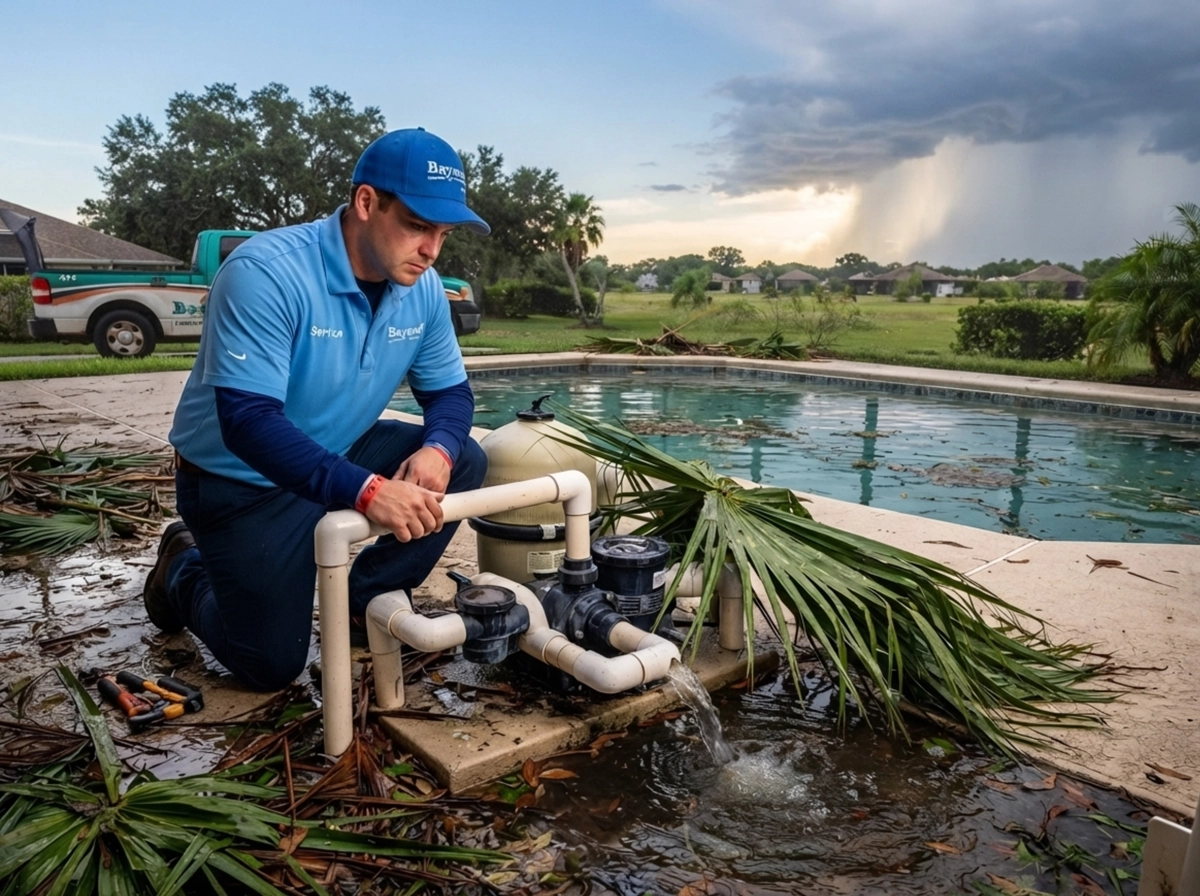
Wind and flying debris can affect exposed outdoor plumbing. When it is safe to inspect your property, check outdoor faucets, irrigation components, hose connections, pool plumbing, and other accessible equipment.
Look for cracked pipes, loose connections, dripping water, or fixtures that have been struck or shifted. Even relatively small outdoor leaks should be repaired to prevent unnecessary water loss and further damage.
Water Heater Problems After Flooding
If flooding reached your water heater, don’t attempt to restart the equipment without having it evaluated. Water can affect electrical connections, gas controls, and other components, potentially creating a safety concern.
Even without flooding, check around your water heater for leaks or signs that something has changed following the storm.
Plumbing Trouble That Appears Days Later
Not all plumbing problems become apparent as soon as the weather clears. Underground leaks, damaged sewer lines, and other issues may take time to produce noticeable symptoms.
In the days following severe weather, keep an eye out for unusual water pressure, slow drains, unexplained moisture, higher water usage, sewer odors, or wet areas around your property. A new plumbing problem that appears shortly after a storm is worth investigating.
Turn to Bayonet for Plumbing Service After Severe Weather
If your plumbing doesn’t seem right after severe Florida weather, Bayonet Plumbing, Heating & Air Conditioning can help. Our professional plumbers can diagnose leaks, drain and sewer line problems, water heater concerns, and other plumbing issues affecting your home.
Don’t Sweat: Call Bayonet! Contact Bayonet Plumbing, Heating & Air Conditioning for after storm plumbing services in Lakeland, FL today!